A First-Timer’s Guide to the Golden Triangle
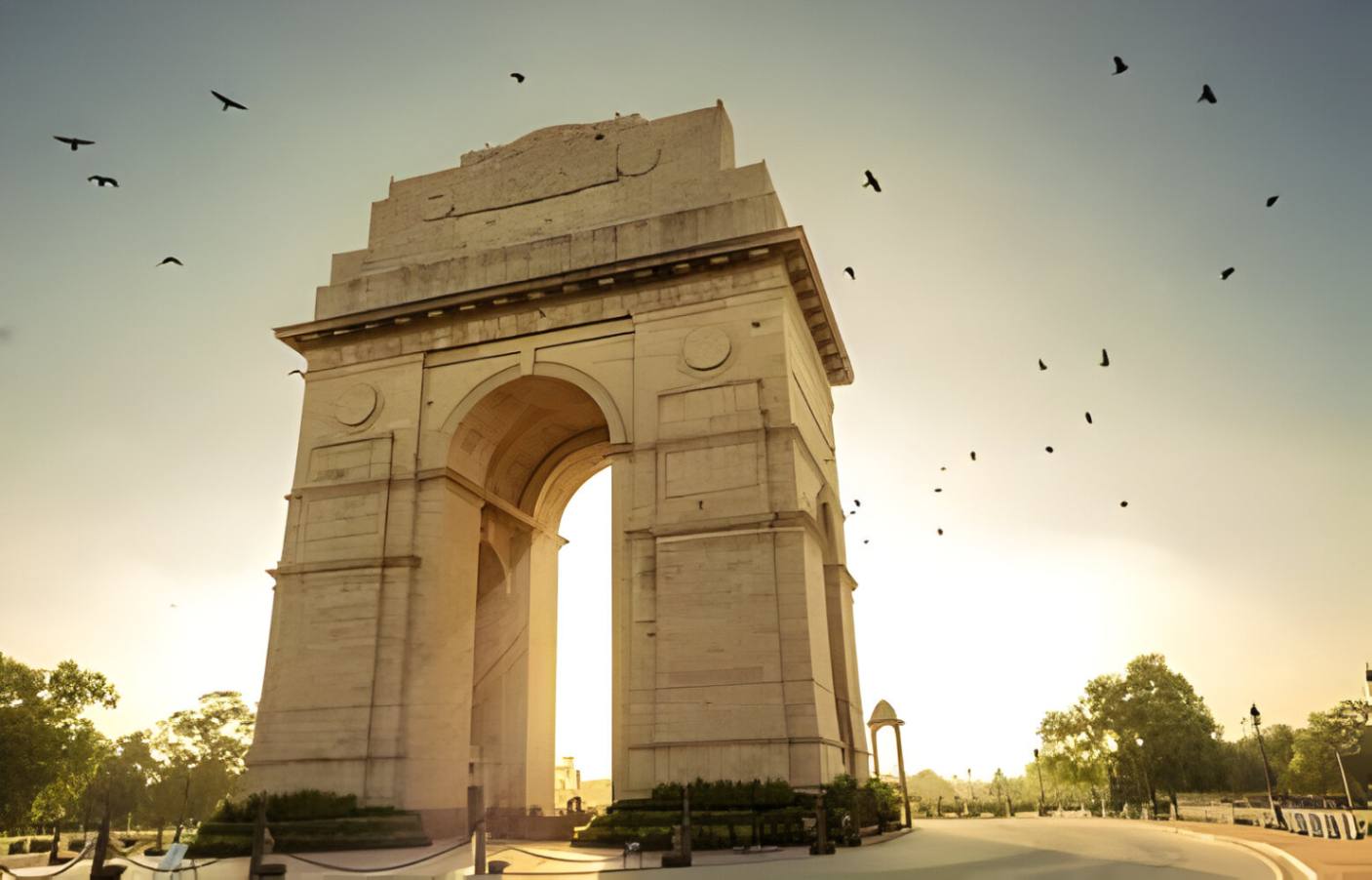
The Golden Triangle is the name given to the classic first journey through northern India: Delhi, Agra and Jaipur, three cities a few hours apart by road, each with a character entirely its own. Together they hold several UNESCO World Heritage Sites, some of the finest Mughal and Rajput architecture in the country, and an easy introduction to the pace and colour of India.
This guide is written for travellers seeing the Golden Triangle for the first time. It covers where the three cities sit, how long to allow, when to travel and what is worth your time in each.
Where is the Golden Triangle?
Draw lines between Delhi, Agra and Jaipur on a map and you have a rough triangle. The distances are manageable:
- Delhi to Agra: about 230 km, roughly three and a half hours by road on the expressway, or under two hours by train.
- Agra to Jaipur: about 240 km, around four and a half hours by road, with Fatehpur Sikri and the Abhaneri stepwell close to the route.
- Jaipur to Delhi: about 270 km, five to six hours by road.
Most travellers arrive and leave through Delhi, which has the best international connections. The triangle also extends easily, to Varanasi on the Ganges, to Ranthambore for tigers, or to Udaipur and the rest of Rajasthan.
Why visit the Golden Triangle first
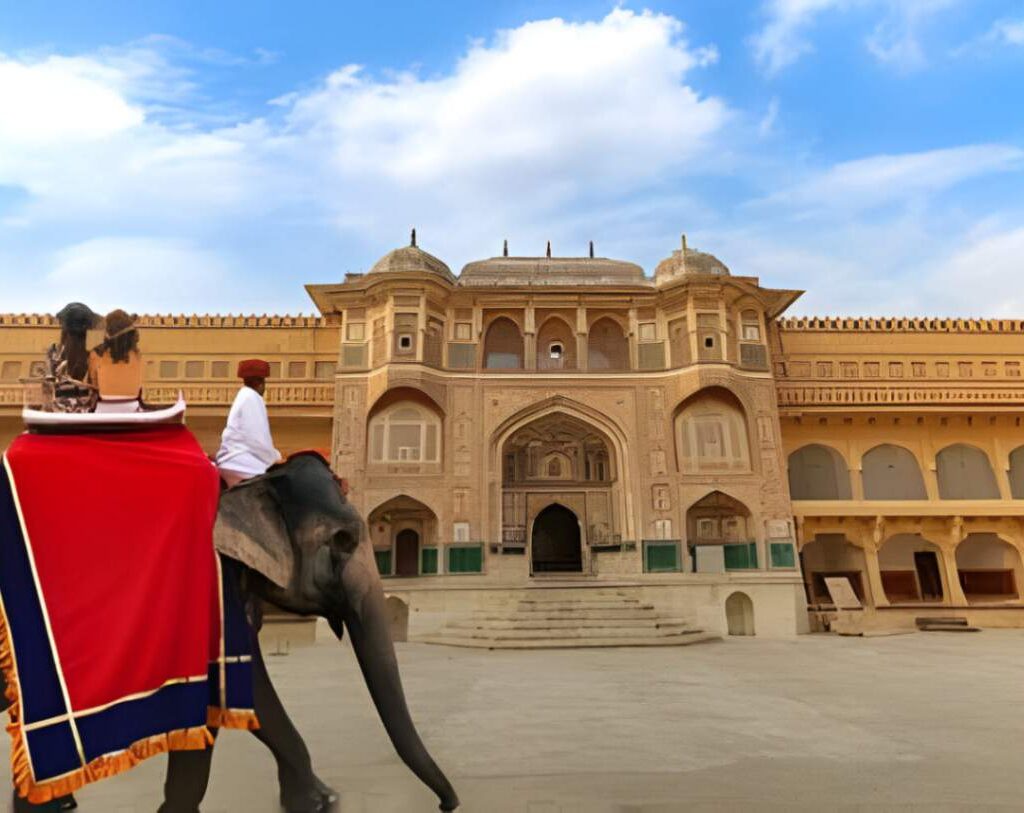
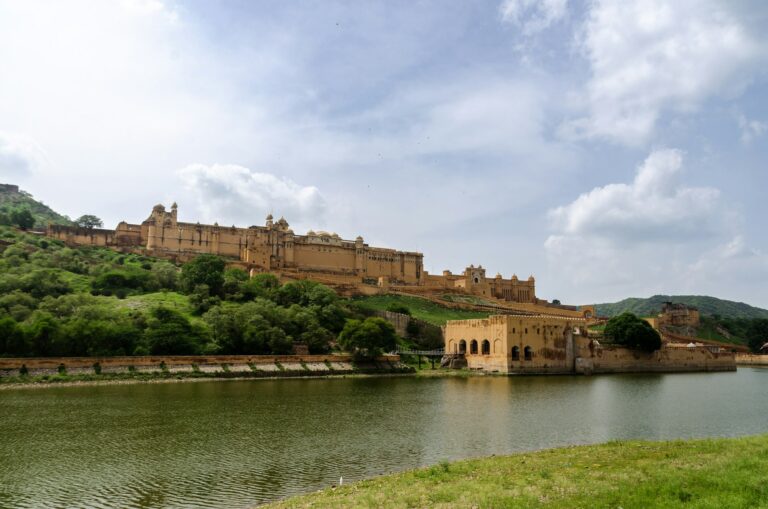
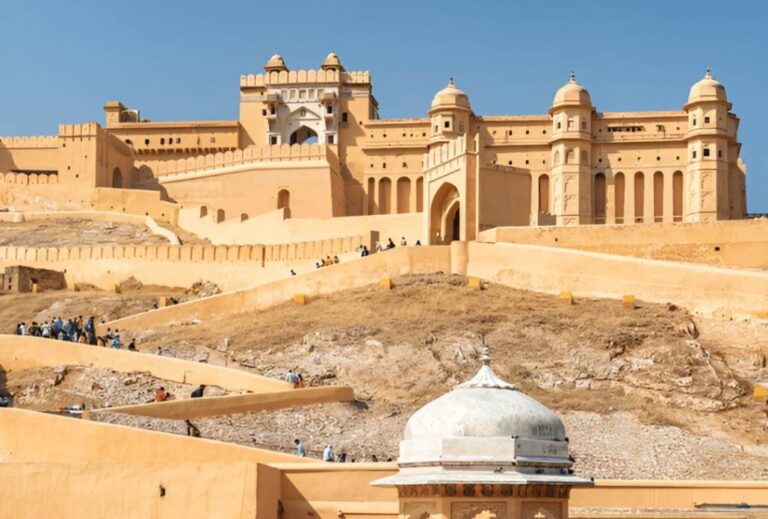
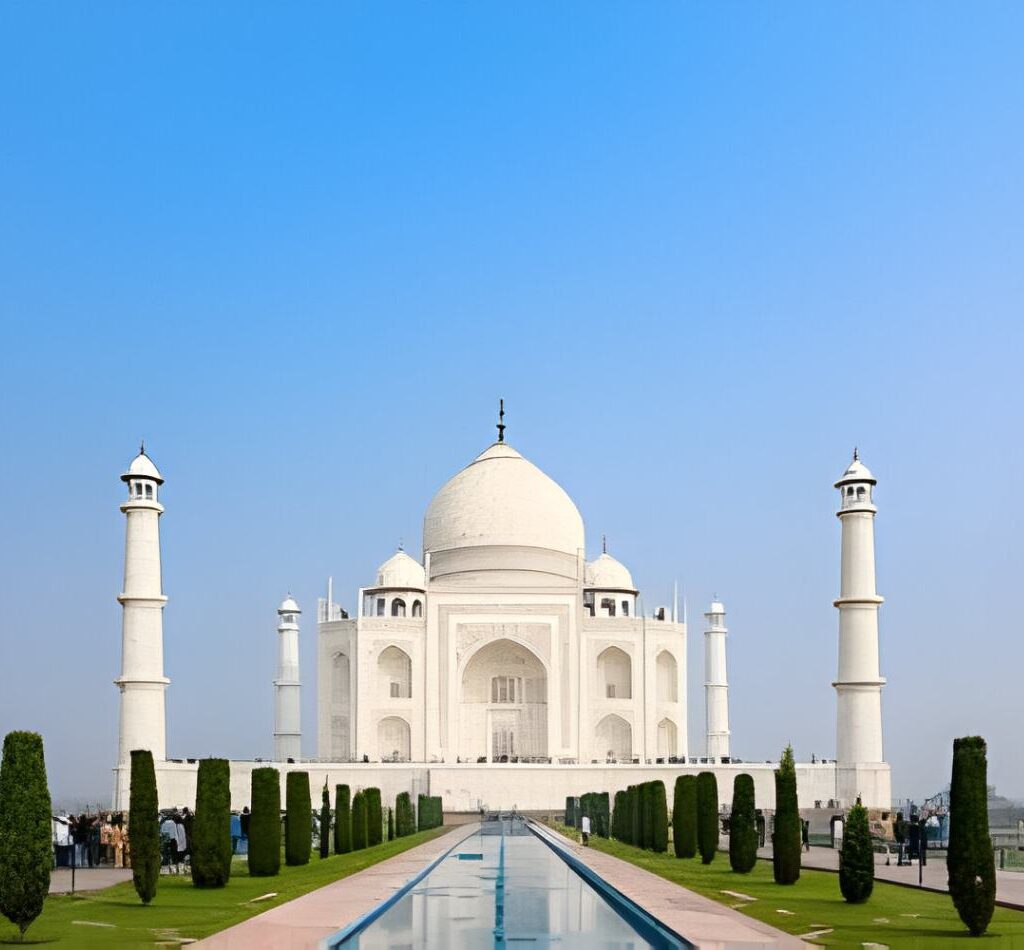
Few routes in the world pack so much into so little travelling time. In a week you can see the Taj Mahal at first light, walk the lanes of Old Delhi, climb to Amber Fort above Jaipur and watch the city from the terraces of a palace hotel.
The Golden Triangle is also a gentle introduction to India. The roads are good, the hotels are among the best in the country and the distances are short, which leaves room for slower moments: a cooking lesson in a family home, an evening at a step-well, or an afternoon with a craftsman in Jaipur.
How long to spend on the Golden Triangle
Seven to ten days is ideal. Allow two or three nights in Delhi, two in Agra and three in Jaipur. That gives time for the Taj Mahal at sunrise and again at sunset from Mehtab Bagh across the river, and for the forts and bazaars of Jaipur without hurrying. Our Golden Triangle tour follows this pace over eight days.
A sample week on the Golden Triangle
- Days 1–2, Delhi: Old Delhi’s Chandni Chowk and Jama Masjid, then Humayun’s Tomb and Qutub Minar in the new city.
- Day 3: Morning train or drive to Agra; the Agra Fort in the afternoon.
- Day 4: The Taj Mahal at sunrise, the tomb of Itmad-ud-Daulah, and sunset from Mehtab Bagh.
- Day 5: Drive to Jaipur by way of Fatehpur Sikri.
- Days 6–7, Jaipur: Amber Fort, the City Palace, Jantar Mantar and the Hawa Mahal, with time for the bazaars.
When to visit the Golden Triangle
The most comfortable months are October to March, when days are warm and dry and evenings are cool. December and January can be foggy in the early mornings around Delhi and Agra, so it helps to build in a little flexibility. April to June is very hot, and the July to September monsoon brings humidity and heavy showers.
Getting around
A private car and driver is the most comfortable way to travel the Golden Triangle, with expert local guides in each city. The fast morning train from Delhi to Agra is a pleasant alternative for one leg. The Taj Mahal is closed on Fridays, which is worth remembering when planning the days. For opening hours and ticketing, the official Taj Mahal website is the most reliable source.
Planning your journey
If you would like to travel the Golden Triangle privately, with hotels and guides chosen around you, see our private Golden Triangle tour or tell us about the journey you have in mind.